The Body Moves Into Nature

Imagine how it would be for us if the most important part of our day would be the time we are in nature. To take off our shoes and feel the earth beneath our feet. To feel the sunlight and wind on our skin. To breath deeply taking in the scent of trees, plants, flowers. To hear birds singing and the swoosh of flight. To taste the salt of the sea, the dryness of the desert, the dense moistness of the forest.

We human beings are intimately connected to the earth. Our Mother Earth comprises not just the soil, rock, and water beneath our feet but also the deep mantle and deeper core. So, too, it is the air we breathe and the atmosphere that keeps us upright and moving.  We intuitively understand this intimate and essential connection–this oneness. And yet, so often we ignore it.

globe_east_540

Our lives are busy, our schedules are over-the-top full, and the demands we and others place on ourselves have us living in a state of forgetfulness. The thought of our connection, our natural affinity, and our essential need to be in nature slips from our consciousness.

Let us remember why we need this essential connection with the earth. Humans evolved not in cities, not in urban sprawl, or on highways, but in forests, on the grasslands of the plains, in the mountains, and on the waters. Let us consider that our bodies are interaction with the environment and that this interaction allows us to know before knowing.

Let us consider this.

  • Our connection is vital. The earth’s magnetic resonances vibrate at the same frequency as human heart rhythms and brainwaves. Our energies are one with the earth.
  • We feel better in a green environment. Being in nature for as little as five minutes a day reduces stress. Even looking at photos and pictures of nature can reduce stress.
  • The absorption of sunlight stimulates the production of Vitamin D which protects us from cancer, depression, and osteoporosis. Sunlight balances our mood, helping to keep us on an even keel.
  • Using our bodies in space by walking or running on an uneven terrain, uses a broader range of movement as well as fine-motor movement and more fully engages our balance. The more surely we move in our environment, the more secure we feel.
  • When we are in a natural environment, we can exercise the eyes by frequently roaming between far and near and thus creating more variation. Training the eye muscles in this way helps to keep our physical vision strong. And, by being in and attuning to nature, we also exercise and strengthen our subtle sense of sight–that ability to see beyond what’s there on the surface.
  • Living with close proximity to and interacting with green and water helps to protect us from lung and thyroid diseases, depression, anxiety, and diabetes among other ailments. Being in balance with our outer natural environment also balances our inner environment all the way down to out cells.

Let us re-define health, to mean not only the absence of disease, but also the balance of the bodymind with our natural environment. In this way, we see that removing ourselves from nature is detrimental to our health and well-being.

Let us choose. Select one activity routinely done inside on a regular basis and move it outside to nature. Instead of the treadmill walk, jog, or run outside. Instead of the stairmaster, climb a hill or even find some outdoor stairs. Instead of indoor rowing, go kayaking or canoeing, or find a row boat in a pond. Instead of driving, walk or ride a bike.  Instead of texting, watching TV, or surfing the Internet walk around the block or walk to a local coffee shop and meet a new friend. Instead of eating in the car or on the run, stop at a park and eat on a bench. Instead of meditating or doing yoga on the cushion or mat, move outside to the natural world.

Choose to live as we are meant to live in our most essential natural world.

Photo: NASA Goddard Space Flight Center Image by Reto Stöckli (land surface, shallow water, clouds). Enhancements by Robert Simmon (ocean color, compositing, 3D globes, animation).

Joy and Sadness

Previously, we have explored the emotions of anger, fear, worry, and grief. Today, our topic is joy and sadness. Joy and sadness are about caring. When we get something we care about we experience joy. It may be a beautiful sunset, a longed-for treasure, a long-awaited goal, or a blossoming of heart-felt relationship. Joy resonates in the body as a twinkle in the eye, a blush upon the cheek, a smile on the lips. When we lose something we care about, something dear to us or our community, we experience sadness: The loss of friendship, opportunity, or treasures-of-the heart. Sadness resonates as a tear in the eye, a pallor to the cheek, down-turned lips.

Slide1

In traditional Chinese Five Element Theory, joy and sadness are the emotions related to the fire element which is expansive, upward in motion, and relates to heart energy.  Fire, symbolic of combustion, represents that fleeting moment of maximum activity followed by its falling away. From a physiological perspective, all emotions are electro-chemical signals that flow through us in an unending cycle. Every emotion is a specific signal asking us to focus, to collect information, and then to act accordingly.

Joy and sadness are related to heart. We talk about the joy in our hearts and our hearts breaking with sadness. Joy manifests in us as love, laughter, and enthusiasm and when balanced, we are able to give as well as receive warmth and delight in the company of others. Sadness manifests as a fall in energy, a momentary melancholy, and withdrawal away from others. Often when we are sad, a whimper or tears come.

In both the ancient and the modern Western traditions, when we are balanced, emotions move. So, too with joy and sadness. If stuck, too much joy manifests as always joking, laughing, and talking–always on without pause. And, when there is too much sadness we are in a state of helplessness and despair; continuously drained, down, melancholy, depressed.

Joy and sadness are associated with compassion. When we see suffering, we experience a twinge of sadness, a feeling of concern and connection, just before we feel a willingness to act. When suffering has been relieved we then experience a moment of joy. Often, sadness can get stuck in caregivers and others in the healing and humanitarian professions. This is because instead of letting go of the concern and connection they feel towards those they are helping, they get stuck in sadness; leading them to take on more responsibility than is reasonably theirs to bear. Sometimes, unable to shake their sadness, they opt instead instead to leave a profession they love. Seeing thousands of starving many children, they miss the joy of the ones whom they have fed and rather, focus on those they have been unable to reach.

What can we do when joy or sadness gets stuck? We can notice. Turning inward to our bodies, we can invite the whole thing about the joy or the sadness to come forward. We can make contact, acknowledge, and listen deeply as we keep whatever comes company. Just as clouds cannot be chased away; stuck joy or sadness can’t either. It is only by turning our attention to it, by saying “hello,” and by actively listening that we can once more live our life forward.

Healthy joy and sadness are like the clouds in the sky; they pass through leaving not a trace, and always there are more another day.

Danger! Threat! Fear!

Did you know that fear keeps us alive? It is essential to our survival. In the face of danger, we become afraid and parts of the brain activate the fight flight reaction.

Slide1

Both western science and ancient Chinese Five Element theory recognize fear as that emotion that helps keep us alive. In Five Element theory fear is associated with kidney energy or qi. Kidney qi is of a special type. It supports the body in reproducing, growing, and developing–the bodily life cycle. So, it is not surprising that fear works with kidney qi to keep us alive.

From a western scientific perspective, fear arises from a perceived threat and we experience the physiological response called fight flight or the stress response. Fear is an important element of fight flight because when we feel fear that’s a signal to us that we need to pay attention, not just react but really pay attention.  Here’s why. So important to our survival is fight flight that when a threat stimulus reaches the thalamus, its first processing point in the brain, the same stimulus takes two different processing paths. The short route is rough and fast. The long route brings in higher processing and is much more precise but is also slower.

The short and long processing works like this. Suppose we’re hiking through the woods and just up ahead, we see something. It looks like a long narrow shape coiled up on the path. The short route says, “Must be a snake!” “Snake,” says the amygdala, “I’ll tell the hypothalamus to turn on the stress response!” At the same time, the long route sends the information to the cortex for higher processing, “Wait a minute. It kind of looks like a snake but is it really?  No, it isn’t. It’s twisted woody vine.” But, let’s check in with explicit memory.” The explicit memory is consulted through the hippocampus. “This is twisted woody vine. I’ve seen this before.” Word is sent to the amygdala. “No snake! Just twisty woody vine.”  The message is received and more messages tell the nervous system to reset.

The fight flight response causes physiological changes in our body via the sympathetic branch of the autonomic nervous system. These include elevations in perspiration and heart and respiratory rates. It makes sense. If we’re going fight or flee, we need muscle power and that means we’d better have oxygen and blood flow going to the muscles so we can punch harder or run faster. “Snake! Run!”

At the same time that the sympathetic nervous system is ramping up glucose production, it is also making other less noticeable but just as important physiological changes in the body. The pupils dilate, blood is drawn away from the skin to the muscles alas the saying, “white as a sheet,” when someone is really afraid. Parasympathetic modulated responses such as digestion and large intestine and bladder functions cease. The body is so focused on fight or flight that the bowel and bladder may even empty spontaneously.

When  a threat presents itself, fear arises and the stress response system turns on. When the danger passes, our fear evaporates and the nervous system shakes off the stress response by re-balancing its sympathetic and para-sympathetic branches. Animals in the wild literally shake all over once danger has passed.

But what happens when our nervous system isn’t able to shake it off? This happens when one perceived threat is followed by another one before the nervous system has had time to reset. This is the dilemma of our modern life. The dangers and threats we face are not tigers looking for their next meal and usually, not even snakes in our path. We face a plethora of perceived dangers often driven by our own thoughts. We are afraid of not having enough of what it takes to meet the challenge that lies ahead. Perhaps we are afraid we can’t complete or achieve that which we aspire to or that we are inadequately prepared for what we might be asked to do. “Will I get laid off?” “Is this relationship going to fall apart?” ” What’s going to happen at work today? Will my project get approved?” “Do I have enough money to pay the mortgage this month?”  These are all survival fears! And, one after another they arise without ever giving our bodies time to reset. The result? We live in a state of fear and physiological stress. It takes its toll on our health and well-being. Our kidney qi gets zapped.

If we don’t do something non-stop fight flight or stress response can turn from something that saves us into something that kills us. What can we do?

We can pause. Remember that when  a threat appears, we feel fear and the brain processes it both on a short,  fast track and on a long, slow tract. The fast track processing gives a quick and rough appraisal to the amygdala, “Ah, it looks like a threat. Better to act now than be sorry.”  But, if we pause, we allow the long tract enough time to process. The higher processing of the cortex and explicit memory via the hippocampus can weigh in. Is this really a threat? No, it isn’t. The body can relax.

Our fear is a signal. It is a signal to pause and bring our awareness inside to the whole thing about the perceived threat.  We can make contact with it by saying, I’m sensing something in me that’s really afraid … .” We can acknowledge it by saying, “Hello, I see you’re there.” We can keep it company with interested curiosity and when it is ready to tell us something, we can listen mindfully, with our full attention, non-judgementally and with compassion.  We can ask, “What is this wanting to happen?” or “What is this not wanting to happen?” This practice of pausing with awareness can save our lives. It can keep the fight flight, stress response at an appropriate level. Turned on when necessary; turned off when not. It can keep our body mind in balance, healthy and well.

Transformative Grief

Grief is our natural emotional response to a loss of something or someone with which or with whom we had a bond. We grieve when someone we love passes. We grieve when we are separated from someone important to us or from a job that is no longer ours or from a lifestyle in which we can no longer participate perhaps due to illness or misfortune.

Slide1

Grief is one of the five emotions (the others being joy/sadness, worry, fear, and anger) described by the ancient Chinese Five Element Theory. Grieving is a process; it moves like the seasons, like summer into autumn. Summer’s creative action culminates with the harvest while autumn’s energy strips the leaves from the trees and makes everything bare. The leaves fall to the earth giving nourishment for new growth in the spring. Grief moves like the active energy of summer falling away into the inward-turning and letting go of autumn.

Grief’s living forward energy cleanses and purifies as it distills creative, active bonds into their essence, this most precious thing that carries us forward with natural resilience to new creative action. Just like the resilience of nature as it sprouts, blooms, and withers in continuous cycle. S. A. Berger, in his 2009 book Five Ways We Grieve, identifies four paths of creative action which may come from grieving.  These include preserving the memory of the loved one or lost thing, recreating a sense of family or community, helping others dealing with the same illness or issue of the loved one or lost bond, and creating meaning through religion, philosophy, or spiritual quest. In each of these there is a life-forward movement. Think of the grieving parents of a young Leland Stanford Jr. who after losing him to typhoid fever when he was only 15 decided that because they could not do any longer for their own son that they would do for the children of California. Out of this they built Stanford University, now one of the world’s most prestigious. Think of those who have rebuilt families after losing one of their own to war, illness or accident or towns that after losing many of their inhabitants to earthquake, tornado, or flood have built again never losing the memory from which they have come. Think of those who through the grieving process have given themselves to healing others, providing solace, or seeking the spiritual–reaching out, touching, transforming suffering into the sweetness of the moment.

Grieving is not all sadness. It can also bring forth moments of delight and laughter when we remember something joyous, something funny, something wonderful about our loved one or loss. I remember a family story about my father’s remembering his Aunt Bertha after her death.  The story goes that Aunt Bertha was a no nonsense women, who worked in an airplane factory as a welder during the war. Once at the dinner table, and much to my father’s delight, she took a big piece of cherry pie even though she had not yet finished her meal.  When my grandmother, her sister, admonished her  she matter-of-factly said, “You never know if there will be any left the next time round. I’ll just have mine now.” The story then goes that my father, grieving the loss of his dear aunt, laughed so hard telling this story that tears came to his eyes, happy tears for his Aunt Bertha.

What happens when grief gets stuck? Unable to process, to transform, it hunkers down. Its energy unable to move becomes oppressive rendering us unable to function. We may become lost in sadness or depressed for a prolonged period of time. Or, we may disassociate from our grief. Unable to sense it in our bodies we think it isn’t there. Perhaps we hold a belief that grieving is just something we don’t do, that we just have to get on with life, so we push it away.  Or, we exile it because another part of us thinks that it’s too much to bear. But, it isn’t. There is room for all to come.

When we allow our grief to come to us like autumn comes in nature, when we are present with it, acknowledge it, keep it company, and sit with it with interest and curiosity, it will show us its life-forward energy and we will be transformed.

Worried Sick?

Worry, like anger, joy/sadness, grief, and fear is a natural emotion. For thousands of years, we have recognized the energy of worry as that energy which triggers thinking. The feelings of worry–uneasiness and concern– move us to think how to satisfy the worry.

Slide1

In its natural form, worry is healthy. And like all healthy emotions worry moves.  Worry moves us to think. Thinking moves us to a solution. Then worry releases leaving as naturally as it arrived in us. This movement from worry to thinking to solution is something we do every day.

Suppose that we live by a river. In the spring, we notice that the rains swell the river.  Sometimes the river becomes so full, it overflows its banks. Our house is right there and we notice that when the river overflows, the water approaches our house. We notice that it comes close, just to the border of our garden.

Now, worry arises in us. We worry that the water could flood the house! So what happens? Our worry leads us to think how to protect our house. “What can we do to protect the house from being flooded by the river’s waters?” We ask ourselves. “Ah, we can bring sand bags to protect the house; or we can put the house on stilts; or we can work with others in the community to build a higher levee to protect our homes.”

Our thinking gives us options;  we have three here already. It also helps us to see which one fits best. Ah, sandbags seem best. We discover that the city stocks them every year for residents just like us. We make note of where the city stockpiles are and how to get there on several different routes. We note that the sandbags are within five minutes of our house. Deep breath. We have a solution and a plan to implement it. No more worry.

But suppose instead of leading us to this kind of constructive thinking, our worry leads us into a negative kind of thinking–a circular and repetitive thinking that feeds upon itself. If instead of problem-solving thinking, we careen off into this negative kind of rumination, we might think like this.

“There’s nothing I can do to stop the river from flooding. This is futile. What do I do if the water starts rising. What if I can’t get away from the water. What if the water ruins all my belongings. I have no place to go. I am alone. What do I do if the river floods? I can’t stop it. I’m alone. What do I do? I’ll lose everything.”

And, so on and on in a circle that traps the worry and gives rise to a sense of hopelessness and isolation. We become depressed; everything seems dark and flat and negative. No matter which way we turn we end up in the same place, in the same circular pattern.

From time to time, we all may find ourselves slipping into negative rumination. Then we catch it!  But, if we don’t it becomes oppressive. We feel trapped. Worry is now a concern because it leads not to problem solving but to negative, circular thinking that makes us sick.

The expression, “I’m worried sick,” comes from our collective human experience of worry gone awry. We become anxious, depressed, isolated. We stop caring about our lives; we refuse to see our friends. Stuck worry makes us sick and we suffer.

So what can we do? We can bring awareness to our worry and then turn to our body, sensing and accepting what comes. We can acknowledge it, keep it company and listen compassionately without judging.

“How does one do this?” We may be asking. Mindfulness meditation, BodyTalk, and Focusing  are three practices that help us to do this. In all three  we focus our attention, receive what comes compassionately, and acknowledge non-judgmentally.

On Anger

Emotions are natural expressions of our whole organism. In the ancient Chinese healing arts, Five Element theory in particular, five natural emotions are defined: Anger, joy/sadness, worry, grief, and fear. In this tradition, as in others, each emotion has a natural expression that all of us recognize.

Slide1

Anger moves us to action. When we see a wrong or something out of the natural order of things, anger rises up and moves us to action. Perhaps we see a small child standing alone in a busy parking lot. We sense anger in us and, at the same time, the urge to lead the child to safety. Once the child is away from danger, the anger dissipates; we turn our attention to the child, smiling we ask his name and if he knows where his mom is.

Healthy anger moves;  it rises up and falls away. But what happens when it doesn’t move? What happens when we hold on to that anger? It seethes. Over and over our self-talk reproaches the child’s mother for leaving her child unattended in the busy parking lot.

This is sticky anger. And there’s more. Today’s anger has stuck onto some past experience. Perhaps as a child we felt unsafe. Perhaps we were left alone in an unsafe place. The small child became angry and that anger moved it to find safety. “Make me safe!” If no one came to help her; she may have coped by building a wall or fortress around her; by pretending that everything was OK; I am OK she would tell herself.  The fortress, the “I’m OK,” and the anger stuck.

Today’s anger gets all caught up in that. This “sticky” anger is not helpful; it gives us no space to understand the context of this current situation. Everything gets filtered through us in the guise of that little girl and the fortress, and the “I’m OK,” and the anger whether we are aware of it or not.

The mother is here in front of us right now. The anger is burning in us; we feel a pressure or something that’s hard to describe.  Then we realize (or maybe not) that she is crying. Picking up the child, she admonishes him for running away as she hugs him tightly to her breast. She thanks us profusely. There is a moment of recognition (or not)  in us that we’ve read it wrong. This is a good mother; she takes care of her child; she loves her child. She is thankful for our help.

Perhaps, at this moment, we feel puzzled and grateful or perhaps we just grumble. Outwardly, we express our thanks that child and mother are safe and sound. We move on. Inside, the anger and the whole thing about it recede into our subconscious until triggered again.

This is what happens in life. Our experiences of the present get caught up, get filtered by stuck experiences and emotions of the past.

Natural anger moves; it dissipates; it leaves no trace. Stuck anger lodges in the body and can express itself in many ways: As resentment, or as a constant undercurrent of irritation or as exploding rage. Stuck anger makes us sick. It gives rise to suffering. So what do we do?  We can bring awareness and just notice that something in us is angry, irritated, frustrated, or raging. We can acknowledge it, keep it company and listen compassionately without judging. When we do this, we will experience a shift; the anger and its story will move; will release; and, we will feel the flow.

“How does one do this?” We may be asking. Through BodyTalk and Focusing, the body becomes aware of the anger and the whole context of that anger–the stories, feelings, images, judgments– the whole thing. We can then approach the anger compassionately, listen to what it wants to tell us; and experience the healing shift of life-forward energy. When we experience anger and it doesn’t feel right and appropriate in the moment or it lingers on and on and wants our attention, then BodyTalk or Focusing or both can be just right for us.

More On The Body

Last week, we talked about people feeling in their body and offered a definition of body as interconnected process, interacting with the environment, sharing wisdom with us all the time. We talked about our bodily process of experiencing the world, the environment in which we live and how we describe that. We gave some common examples. The stomach tied in knots. The queasy feeling in the abdomen. The tightness in the chest. The clenching in the throat. Now, what happens when we don’t feel in our body? When there is no stomach tied in knots?  Does this mean that there is something wrong with us? Or that our definition of body as process isn’t holding up?

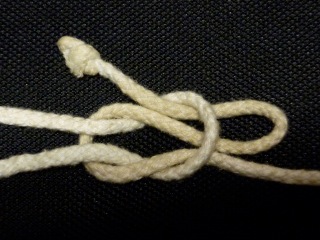
Not at all. Because the life process that is body is not necessarily felt by the individual in the physical body, we don’t have to feel physical destinations or associate a feeling with a physical thing such as “a knot in my stomach.”Kreuzknoten-slip_2

For some of us, we experience our bodies simply through an inner knowing. Our experiencing will lead us to say, “I have an inner knowing.” “I just know it.” “It feels right.” We have a sense of something and whether something fits because it feels right. What we don’t have is a subtle somatic experience. We are still sensing without bodily destinations and things we can describe.

In my personal experience when something is tenuous, not quite formed, or afraid of coming forward, I feel and know it is there but don’t have a place or name for it. Over time, as it develops it may feel like it is just there, in that space outside my head or beyond my shoulder, but not in any way associated with head or shoulder. Interestingly, it gives me information all along the way from the time when I just sense something to the time when I sense something over there. I don’t have to experience it as “a knot in the stomach” to listen to what it wants to tell me.

Another example of someone who doesn’t sense things in his body is someone very close to me who is a mathematician. He’ll say, “I don’t feel anything in my body,” but he’s a keen listener and will often say, I just know this; it feels right.” He’s very accustomed to thinking precisely, abstractly and intuitively; it’s in his training, so it makes sense that his bodily experiencing is abstract without place names like “stomach” and things like “knots.”

It isn’t how felt senses manifest themselves, it is whether we listen and how we listen. If we don’t listen with distance, connection, and respect or we don’t listen at all we won’t get a sense of how it is for us right now.

I invite you to sense how you, yourself, experience the body as interconnected process, interacting with the environment, and sharing wisdom. Listen and share how it is for you right now.

The Body — A Different View

In my professional healing and wellness work, I use body-based modalities. But what do we mean when we say body? Do we share a common definition? Experience tells us that we do not.

To some the body is just a thing, “an object in a world of objects.” (Cornell, 2005, p. 221) It is that physical structure, the bones, flesh, and organs. Others acknowledge that the body is alive; it has processes, but it is not all of us. They acknowledge that the body breathes, taking in air containing oxygen and exhaling air containing carbon dioxide; that cells divide and create new cells through meiosis and mitosis; that cells and organs make new substances from other substances through chemical reactions; and that sensory information from the environment is captured and transmitted to the brain where it is assembled into an experience or a situation. But, they maintain the mind, the Self, memory, emotions, knowledge and wisdom is somehow separate from the body.

Venus_de_Milo_Louvre_Ma399_n4

At the same time, most of us would acknowledge that we have experienced a bodily sensation that carries with it meaning. We say things like, “I had a gut feeling this would work out.” Or, ,”I had a gut feeling to stay away from that.” Or, ” My stomach is tied in knots; I’m so worried.” No one asks, “How did the gut know?” “How did the stomach know about worry?” By which mechanism does the gut and stomach have this knowledge?

When questioned the response might be, “It’s just a saying.” But is it? We’ve felt something.  The stomach tied in knots. The queasy feeling in the abdomen. The tightness in the chest. The clenching in the throat. We have felt it. Then we let it go.

Something in the consciousness of our culture keeps us from talking about something so natural. Perhaps because the process is not analytical or rational, we shy away. And yet, we acknowledge these feelings in our everyday communication, “Something in my gut told me to call you.”  And, we make good use of what they tells us.

This is our body talking; not in a physical but in a subtle way, delicately yet precisely. This body, this interconnected process, interacting with the environment, has wisdom that it shares with us all the time. We can learn to pay attention to it in a special way so that we can fully partake of what it has to share.

When we pay attention with focused yet open awareness, moment to moment, and non-judgmentally, we are in Presence. When we are present the whole of us, the whole the body, can sense what wants our attention now. We make contact; we say hello. We listen and acknowledge from that neutral but compassionate Presence. We feel a body sensation, sense an emotional quality or mood, see imagery, and connect to a story.  By doing so, by entering into this respectful relationship with our body, we can heal, grow, and receive that life-forward energy that allows us to achieve that which we desire.

Reference: The Radical Acceptance of Everything by Ann Weiser Cornell
Photo: Wikimedia Commons, Venus de Milo, The Louvre, Jastrow 2007

Sleep? Good for us?

Sleep is complicated, so say the poets and so say many of us. To some sleep is a waste of time. Why sleep when we could be living or working? To others it is akin to death. And, for others it is escape from living. To some it is the agony of insomnia—that craving for sleep but not getting it. And, for yet others sleep is welcomed rest, part of the natural rhythm of living–eating, working, reflecting, playing, sleeping.

IMG_0708

I have always needed my sleep. As a kid I remember my father quoting Benjamin Franklin, “Early to bed and early to rise, makes a man healthy, wealthy, and wise,“ as he shooed my five siblings and me off to bed. Hearing that call to sleep I was ready. Later in college, I would go off to late night gatherings with my friends only to fall sound asleep in a corner while they partied away. They teased me mercilessly but try as I might, I couldn’t stay awake. Years later, working in a high-tech culture that was definitely anti-sleep, I vividly remember colleagues boosting about how little sleep they needed and that lack of sleep never affected their performance. I also recall feeling somewhat inadequate as I kept my silence on my need to sleep.

Science tells us sleep is good for us—for the mind, brain, and body. Sleep is not only good for us, it is as essential as eating.  Here are four good reasons why.

  1. Sleep enhances memory. After a night’s sleep memory performance is 20-to-30 per cent better. After a night without sleep, people are forty per cent worse memorizing lists of words, Matthew Walker of the Sleep and Neuroimaging Lab at the University of California, Berkeley tells us.

  2. Getting enough sleep keeps our cognitive abilities sharp.  On the other hand, sleep deprivation, for example getting four hours of sleep instead of seven-and-a-half or eight, wrecks havoc over time. Each night without adequate sleep adds additional burden to our cognitive facilities. We don’t think as fast, our judgment is poorer, and our reaction time slows down. I’m thinking of my colleagues espousing how lack of sleep didn’t affect their performance. What were they thinking? Or was their thinking impaired? As it turns out sleep deprived people do not know how strong their limitations are. So, there you are.

  3. Getting enough sleep helps us to regulate mood.  Sleep deprived people suffer mood swings. They are irritable one minute and giddy the next. In one study the brains of sleep-deprived participants were scanned as they were shown highly negative images of torture and mutilation. Their emotional brain, specifically the amygdala, showed a strong, hyper-active response while the amygdala of the well-rested control group showed a modest, controlled response.

  4. Sleep keeps our physiology functioning in balance. Our biology reads lack of sleep as a stressor leading to diabetes, heart disease, high blood pressure, and stroke. Studies at the University of Chicago have shown that getting only four hours of sleep a night for six days impairs the body’s ability to metabolize sugar putting the body in a pre-diabetic state. And, not just that! Participants were hungrier and ate more. When researchers checked the participants’ levels of leptin, they found a decrease. Leptin tells the brain that we are full. With these reduced levels of leptin, the study participants didn’t know they had eaten enough, and so kept eating.

So go ahead and sleep! It is good for you.

The Body Knows

The body knows. Walking into a room of strangers, the body senses the situation directly. We don’t think, “I need to check this out.”  The body automatically scans the situation; and sensing the situation knows how it feels about it.

As it happens, we often don’t pay attention to the information our bodies relay to us. Perhaps this is so because the information comes in what we think is a messy way. The stomach feels queasy. There is a tightness in the throat. A pressure in the ears. Or perhaps we sigh, take a deep breath, or feel the heart beating faster or slower or feel our whole insides opening up!

The information comes about the situation and about what we feel about the situation. Walk into a room of strangers and what happens? The body scans the room noticing who is at the center and who is at the periphery. It notices who is at ease, who is tense, and who is shy; and who is smiling, laughing, or frowning. It senses who makes it feel uneasy, or worried, or scared. And, it senses who is welcoming. The body responds with a tightness in the chest, a queasiness in the stomach, or a jumping heart beat, or a turning in, a rolling, or a stammer and there is always something more, something that we can’t quite put into words but is there.

We may say, “I had a hunch about that situation,” or, “I had a feeling about that person.” Indeed, we did and our body let us know. We can’t say how we know. We just know.

When we are in touch with our bodies, we can respectfully connect with our bodily sensing and use the information it gives us to help us navigate situations, keep us safe and at ease, create new ideas, and even dive into new ventures. To gain benefit from the information, we notice what comes forth with interested curiosity. For example, suppose I walk into a room and notice everyone crowding around someone talking about her latest project. I can’t hear what she is saying but I notice that there is a little queasiness in my stomach and I notice that I don’t like that and that there is something about the person’s energy that doesn’t sit right but can’t be put into words. In this moment, something is coming with which I can have a relationship and which I can explore with interested curiosity. I can find out more about the person, the situation, and about myself by listening to what these somethings, this queasiness in my stomach AND this energy that doesn’t sit right, say or show me about the person, situation and myself.

Getting in touch with the body in this way can be enlightening, empowering, and freeing. Try this. The next time you enter a place full of people (it can at work, at the supermarket, or on the bus), take in the space around you and then bring your awareness inside to that middle space in your body–the throat, the chest, the diaphragm, the stomach, the belly. Allowing your awareness to rest there gently invite what wants your awareness now to come. Just sense what’s there. And when something comes, say” Hello, I see you are there.” And notice how it feels when you say that.

This is a first step of getting to know these fluid, life forward processes that have so much to share with us and help us in so many ways.

Crowd San Francisco