
More On The Body

Last week, we talked about people feeling in their body and offered a definition of body as interconnected process, interacting with the environment, sharing wisdom with us all the time. We talked about our bodily process of experiencing the world, the environment in which we live and how we describe that. We gave some common examples. The stomach tied in knots. The queasy feeling in the abdomen. The tightness in the chest. The clenching in the throat. Now, what happens when we don’t feel in our body? When there is no stomach tied in knots?  Does this mean that there is something wrong with us? Or that our definition of body as process isn’t holding up?

Not at all. Because the life process that is body is not necessarily felt by the individual in the physical body, we don’t have to feel physical destinations or associate a feeling with a physical thing such as “a knot in my stomach.”Kreuzknoten-slip_2
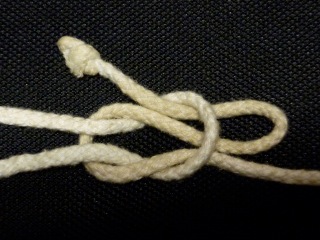
For some of us, we experience our bodies simply through an inner knowing. Our experiencing will lead us to say, “I have an inner knowing.” “I just know it.” “It feels right.” We have a sense of something and whether something fits because it feels right. What we don’t have is a subtle somatic experience. We are still sensing without bodily destinations and things we can describe.

In my personal experience when something is tenuous, not quite formed, or afraid of coming forward, I feel and know it is there but don’t have a place or name for it. Over time, as it develops it may feel like it is just there, in that space outside my head or beyond my shoulder, but not in any way associated with head or shoulder. Interestingly, it gives me information all along the way from the time when I just sense something to the time when I sense something over there. I don’t have to experience it as “a knot in the stomach” to listen to what it wants to tell me.

Another example of someone who doesn’t sense things in his body is someone very close to me who is a mathematician. He’ll say, “I don’t feel anything in my body,” but he’s a keen listener and will often say, I just know this; it feels right.” He’s very accustomed to thinking precisely, abstractly and intuitively; it’s in his training, so it makes sense that his bodily experiencing is abstract without place names like “stomach” and things like “knots.”

It isn’t how felt senses manifest themselves, it is whether we listen and how we listen. If we don’t listen with distance, connection, and respect or we don’t listen at all we won’t get a sense of how it is for us right now.

I invite you to sense how you, yourself, experience the body as interconnected process, interacting with the environment, and sharing wisdom. Listen and share how it is for you right now.


The Body — A Different View

In my professional healing and wellness work, I use body-based modalities. But what do we mean when we say body? Do we share a common definition? Experience tells us that we do not.

To some the body is just a thing, “an object in a world of objects.” (Cornell, 2005, p. 221) It is that physical structure, the bones, flesh, and organs. Others acknowledge that the body is alive; it has processes, but it is not all of us. They acknowledge that the body breathes, taking in air containing oxygen and exhaling air containing carbon dioxide; that cells divide and create new cells through meiosis and mitosis; that cells and organs make new substances from other substances through chemical reactions; and that sensory information from the environment is captured and transmitted to the brain where it is assembled into an experience or a situation. But, they maintain the mind, the Self, memory, emotions, knowledge and wisdom is somehow separate from the body.

Venus_de_Milo_Louvre_Ma399_n4

At the same time, most of us would acknowledge that we have experienced a bodily sensation that carries with it meaning. We say things like, “I had a gut feeling this would work out.” Or, ,”I had a gut feeling to stay away from that.” Or, ” My stomach is tied in knots; I’m so worried.” No one asks, “How did the gut know?” “How did the stomach know about worry?” By which mechanism does the gut and stomach have this knowledge?

When questioned the response might be, “It’s just a saying.” But is it? We’ve felt something.  The stomach tied in knots. The queasy feeling in the abdomen. The tightness in the chest. The clenching in the throat. We have felt it. Then we let it go.

Something in the consciousness of our culture keeps us from talking about something so natural. Perhaps because the process is not analytical or rational, we shy away. And yet, we acknowledge these feelings in our everyday communication, “Something in my gut told me to call you.”  And, we make good use of what they tells us.

This is our body talking; not in a physical but in a subtle way, delicately yet precisely. This body, this interconnected process, interacting with the environment, has wisdom that it shares with us all the time. We can learn to pay attention to it in a special way so that we can fully partake of what it has to share.

When we pay attention with focused yet open awareness, moment to moment, and non-judgmentally, we are in Presence. When we are present the whole of us, the whole the body, can sense what wants our attention now. We make contact; we say hello. We listen and acknowledge from that neutral but compassionate Presence. We feel a body sensation, sense an emotional quality or mood, see imagery, and connect to a story.  By doing so, by entering into this respectful relationship with our body, we can heal, grow, and receive that life-forward energy that allows us to achieve that which we desire.

Reference: The Radical Acceptance of Everything by Ann Weiser Cornell
Photo: Wikimedia Commons, Venus de Milo, The Louvre, Jastrow 2007

What To Do About Cravings

From time to time, all of us have experienced cravings: Those intense and eager desires that drive us to react with behaviors that we often regret afterwards.

For some of us repetitive bouts of craving push us into behaviors that are harmful to ourselves. These behaviors may take the form of eating excessively, smoking, drug-taking, or may take some other form. So, what can we do when a craving–that intense urge–hits leading us to react with a behavior that does not actually help us?

We can surf the urge. Developed for people in recovery for addictive behaviors, urge surfing can help all of us deal with cravings in a way that does not engage a reactive behavior. Based on mindfulness, that state of active, open attention on the present, urge surfing provides a path for riding cravings like a surfer rides a wave.

When a craving strikes we breathe and commit to stay with the feeling. We don’t try to push the feeling away or judge it. We just stay with it. We release tension by noticing what’s happening in the body right now: Head, throat, back, belly, and so on.

We notice our reaction to what’s happening right now. If the feeling is increasing, we imagine that it is like a wave that goes up and up. Like a surfer, we are rising and staying with the wave of feeling by using our breath. We use our breath just as a surfer uses his surf board to stay with the wave. As we ride the feeling of craving, it reaches a crest and then falls away, just as a wave does.

We may even be able to find space as we are riding the craving to be curious, to enquire, “What’s here?” “What do we really need?” “What’s underneath?” It’s not the object of our craving–the food, or cigarette, or drug. Maybe it is loneliness or stress and a desire for relief. Maybe it is emotions or thought patterns and a desire to be free from them. Whatever is there, be kind and gentle and stay with the experience.

So let’s learn to surf the urge with this guided audio recording.

Surf the Urge Audio File from Mindfulness Based Relapse Prevention

Breath – The Best of All

I love stories; this one is from the Prashna-Upanishad. I invite you to enjoy it with me:

Once upon a time, Bhargava Vaidarbhi went to the sage Pippalada (whose name means “eater of the fruit of the scared fig tree”), fire-wood in hand as a symbolic offering and asked, “Good sir, how many powers are there that establish and maintain the universe and its creatures, and which one is the bst of all?” Pippalada thought a bit, then told this tale:

The powers—Space, Air, Fire, Water, Earth, Speech, Mind, the Eye, and the Ear—were talking among themselves, bragging really. They said: “We establish and maintain this universe and the body (hana, literally “reed” or “arrow”)?

Breath (prana) who was really the best of them all, happened to hear and rejoined: “Friends, don’t fool yourselves. I establish and maintain the universe and the body.” The other powers pooh-poohed and didn’t believe her.

So, Breath, rather miffed at not being believed, decided to teach them a lesson. She moved upward, and guess what? All the others moved upward too. Then Breath settled down and, yes, all the others settled down with her. It was just like a swarm of bees following their queen wherever she went. Now the powers realized their dependence on Breath and delighted, sang her praises… (excerpted from Pranayama: beyond the Fundamentals, by Richard Rosen, Shambhala Publications, 2006)

The Empty Boat

Floating across the river in your boat, you are carefully avoiding hidden obstacles, other boats, and too shallow water when, BAM! another boat rams you. Your anger flashes; your heart pumps faster.  You jump up and yell, “You stupid blankity-blank so-and-so!” You shake your fist and stamp your foot. You call out for the other boatman to show himself so you can tell him a thing or two. But, no one emerges. There is no other boatman; the boat is empty. It has slipped its mooring and floats without control. There is no one to be angry with; no one to curse. Realizing this, your fist unclenches and drops to your side. Still muttering under your breath, though, because you believe it would have been so much better if there had been someone there to be angry with, you go on your way.

This is my reading of the Empty Boat story from the Taoist tradition. If it peaks your interest you can read it and others in the book, The Way of Chuang Tzu (New Directions books, 1997) compiled by Thomas Merton in the 20th century. Most likely written around 250 B.C., it is a powerful and timeless teaching that we can apply to our own experience.

“Well, what’s the point of the story?” You ask. John Welwood in his book, Perfect Love, Imperfect Realtionships (Trumpeter Books, 2006), has a helpful explanation that resonates for us. He says, ” The point of the story is that the parents who didn’t see [us], the kids who teased [us] as a child, the driver who aggressively tailgated [us] yesterday–are in fact all empty, rudderless boats. They were compulsively driven to act as they did by their own unexamined wounds; therefore they did not know what they were doing and had little control over it.” [page 89, Kindle edition]

You may think, “So what. What’s that got to do with me?”

These parents, siblings, friends, bosses, and strangers, among others, these empty boats ramming into us with their unkindnesses, their neglect, and their hurtful actions are driven not out of need to hurt us but out of their own unconscious pain–all the hurt, the woundings, they, themselves, have received along the way. When we react with anger, or jealousy, vindictiveness, or defensive stonewalling we do so because of our own grievances, our own pasts, our own experience with people who have hurt and neglected us.

You may say, “Well, of course. I can’t let someone hurt me. I have to stand up for myself. I have to protect myself. I have to survive.”

In answer, Wellwood responds that until we realize that these are just empty boats we remain tied to our own grievance and pain and suffering and this binding keeps us “from opening up to the more powerful currents of life and love that are always flowing through the present moment.”

So what can we do?

We can not take it personally. After all, the hurt, the unkindness was not meant for us even though it has rammed into us. Not taking it personally is compassionate: we have recognized suffering (the suffering of the person who has rammed into us), we have felt for a moment the pain of that suffering (that we too suffer, but have not let that acknowledgement cause us to suffer more), and we have acted to relieve the suffering (in the other person and in ourselves by not retaliating or reacting angrily, or jealously or whatever.)

We have given everyone space. We can relax and breathe fully. Psychologically, this relief quiets our minds. Physiologically, we can protect ourselves from the incessant turning on of the stress-response in our bodies that over times wrecks havoc with our health leading us to suffer all sorts of maladies and disease.

The next time, someone, anyone, hurts us, neglects us, lashes out at us, or acts unkindly, we can say, “Ah,  just an empty boat” as we take a few slow deep breaths letting the exhale last longer than the inhale so our parasympathetic nervous systems have time to turn on a sense of calm within us.

Thoughts

Thoughts. Where do they come from? Where do they go? And what leads one to another? Why do they keep appearing and dissolving? Why do they never stop? What’s the mechanism producing this constant rising and falling away? It’s not as though we can point to any place in the brain and say, “This is where it all happens!”

Some thoughts rise up out of memories, some appear out of thin air, and others pop into our consciousness in an “aha moment.” When we are solving a problem, we use the power of our brains, in particular, the frontal cortex, to “think.” We analyze, relate, and create. But, what about other times when unorganized and disconnected thoughts tumble into our consciousness? Perhaps we’re just having a cup of coffee and looking at the leaves falling from the tree outside the window. Thoughts come any way. Perhaps at this moment they arise from memories of other trees or other cups of coffee or perhaps not. Thoughts about the dirty dishes left in the sink or a friend who hasn’t returned a text message we sent him may take us far away from the cup of coffee and leaves falling from the tree.

Sometimes a thought appears because we’re on the same wavelength with another person. We pick up information (become entangled with someone) and the thought occurs to us. We saw this example last week when we talked about synchronicity. Suddenly I’m thinking of a friend for no reason. The phone rings. It’s the friend on the line.

Thoughts often have a way of bothering us. We may not want to think particular thoughts but in they come, invited or not. We can be so disturbed by them that we become distressed; we want to run away from them; or we yearn to fall asleep. Sleep may be acceptable at bedtime, but not in the middle of the day. What are we to do? Where’s the on/off switch?

There are no muscles, like those that control our bladders, that turn on and off thoughts. But, we can be with them in such a way that they are there without causing us any distress or interest at all. That’s what we do in meditation. When we focus on the breath, thoughts rise and fall away, but we pay no attention to them. In the beginning, we can nod to each one as it appears by saying, “Thought,” and then return to focusing on the breath. After awhile, we don’t feel the need to make this acknowledgement. We simply allow them to do what they do without showing interest, or interacting, or reacting to them. After a few minutes, the space within us grows bigger; we become calmer and more centered. The thoughts are still there, but they have receded into the background like wallpaper in a room that we’ve become accustomed to. We give them no notice and if asked, “What was that thought?” Well, we have no idea. So, in this way, we turn off thoughts.

Focusing on the Breath

Our  breath is always with us. It’s automatic. Although we breathe more than twenty thousand times a day, we pay no attention. But when we notice our breath it can tell us much about the current state of our health and well-being. When we are anxious, stressed, or in pain, we breathe more rapidly and shallowly from the shoulders. When we are relaxed we breathe more easily, gently, and slowly from the diaphragm or belly.

Take a moment right now as you read this to notice your breath. How does it feel? Is it tight? Or relaxed? Shallow? Or deep? Rapid? Or slow? Hard? Or gentle?

If it feels tight, hard, shallow, or rapid I invite you to try this practice.

Sit on a chair with your feet on the floor or on a pillow on the floor with your legs crossed so that your shins are parallel to your body, your back upright (not sloughing over or leaning back). Place your hands on your thighs or fold your hands in your lap.  Set a timer for five minutes.

Close your eyes.

Take a few deep breaths to relax.

Now pay attention to the physical sensation of your breath. That’s all, nothing more. As you breathe in, say to yourself, “Breathing in.” As you breathe out, say to yourself, “Breathing out.”

When thoughts rise up, don’t worry. They will. Notice how they draw your attention away from your breath. Don’t make any judgements; thoughts rising up and falling away are a natural thing. When distracted by thoughts, simply acknowledge them by saying, “Thoughts,” and return your attention to the breath by saying to yourself,  “Breathing in,” as you inhale and, “Breathing out,” as you exhale.

When an ache or pain arises in some part of your body distracting you from your breath, acknowledge it gently by saying to yourself, “Sensation,” and return your focus to the breath by saying to yourself,  “Breathing in,” as you inhale and, “Breathing out,” as you exhale.

If this is not enough to rest your focus on the breath instead of the ache or pain, try this.  Breathe into the place of pain as you focus on the breath. Doing this diminishes the pain and then you’ll realize that it is not there any more. Continue to focus on your breath by saying to yourself,  “Breathing in,” as you inhale and, “Breathing out,” as you exhale.

Keep your focus on the breath in this way until the timer sounds. Now open your eyes. Notice how you feel. Do you feel different? How? This is a calming practice that will greatly enhance your sense of well-being. Now breathe.

Do this every day.

Once you feel comfortable watching your breath in this way for five minutes, increase the time. Don’t worry about how much you increase it. Maybe you’ll watch your breath for just a minute more, for six minutes, or maybe you’ll watch it for ten minutes. When you can comfortably sit for the new period of time increase the length of time again until you reach twenty-four or more  minutes.

Remember, it is the doing, not the duration that is the gift of this practice.