Grounding with Our Mother Earth

How often do you walk on the earth barefoot? Once a day? Once a month? Once a year? Perhaps you can’t remember the last time you walked barefoot on the ground.

Perhaps, you ask, “Why should I?” Or, maybe you recall your mother’s admonitions to put your shoes on. Or, could it be that your feet having been too long encased in shoes of sundry sorts are now very tender making you squeamish?

Walking or standing barefoot on the ground is good for us; it’s good for our health. Our earth is an electron dispenser, sending out a steady flow of electrons which help our bodies’ antioxidant scavenging process by supplying additional electrons from the unlimited reservoir on the earth’s surface. These neutralize the harmful effects of environmental 50-60 Hz electromagnetic fields and free radicals arising from faulty metabolic processes in our bodies.

Regular contact with the earth can help us :

  • lower harmful cortisol levels
  • reduce inflammation
  • sleep better
  • improve chronic illnesses such as diabetes
  • improve blood circulation
  • alleviate PMS, aches and pains
  • feel good

The flow of electrons encompassing the surface of our entire planet Earth, also exists on the surface of all conductive things in contact with it including people, plants, and animals. Pulsating at approximately 10 Hz which is similar to the brain’s alpha waves, characteristic of the calm, restful yet alert state of meditation and following a rhythmic 24-hour circadian rise and fall in amplitude, this healthy electron flow is always available to us as long as we are in contact with it. When we insulate ourselves by always wearing plastic and rubber-soled shoes; living and working in buildings where our feet don’t touch the ground; traveling about in cars, buses, planes, trains, and bikes; and surrounding ourselves with all varieties of electrical equipment in our homes and places of work, we can’t partake of Mother Earth’s bounty of healing electron flow.

What to do?

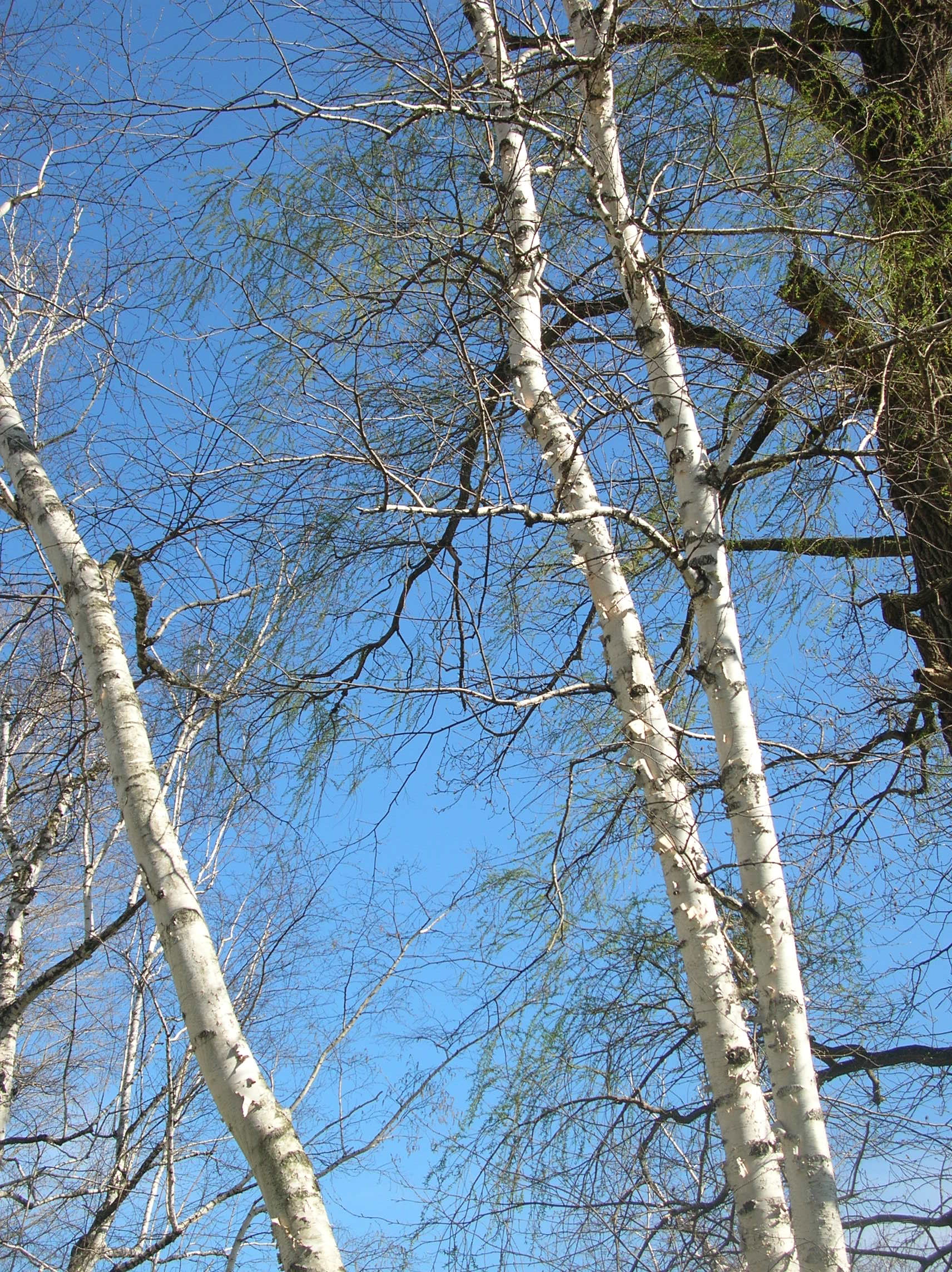
  • Take your shoes off. Sitting down or walking around, plant your bare feet on the ground in a park or your backyard. Wriggle your toes. Have some fun.
  • Toss a blanket on the ground on the grass, in a field or woods, on the beach. Lie down. Watch the clouds pass by.
  • Walk barefoot in your house if it is built on a slab.
  • Walk barefoot at the beach. Walk barefoot in your garden. Walk barefoot anywhere you can.
  • Eat outside and let your bare feet enjoy the fresh air, too. Even at a sidewalk cafe, slip your feet out of your shoes to feel the ground beneath them.

Find any excuse to walk, sit, or lie on Mother Earth. Do often. Daily, if possible.

What To Do About Cravings

From time to time, all of us have experienced cravings: Those intense and eager desires that drive us to react with behaviors that we often regret afterwards.

For some of us repetitive bouts of craving push us into behaviors that are harmful to ourselves. These behaviors may take the form of eating excessively, smoking, drug-taking, or may take some other form. So, what can we do when a craving–that intense urge–hits leading us to react with a behavior that does not actually help us?

We can surf the urge. Developed for people in recovery for addictive behaviors, urge surfing can help all of us deal with cravings in a way that does not engage a reactive behavior. Based on mindfulness, that state of active, open attention on the present, urge surfing provides a path for riding cravings like a surfer rides a wave.

When a craving strikes we breathe and commit to stay with the feeling. We don’t try to push the feeling away or judge it. We just stay with it. We release tension by noticing what’s happening in the body right now: Head, throat, back, belly, and so on.

We notice our reaction to what’s happening right now. If the feeling is increasing, we imagine that it is like a wave that goes up and up. Like a surfer, we are rising and staying with the wave of feeling by using our breath. We use our breath just as a surfer uses his surf board to stay with the wave. As we ride the feeling of craving, it reaches a crest and then falls away, just as a wave does.

We may even be able to find space as we are riding the craving to be curious, to enquire, “What’s here?” “What do we really need?” “What’s underneath?” It’s not the object of our craving–the food, or cigarette, or drug. Maybe it is loneliness or stress and a desire for relief. Maybe it is emotions or thought patterns and a desire to be free from them. Whatever is there, be kind and gentle and stay with the experience.

So let’s learn to surf the urge with this guided audio recording.

Surf the Urge Audio File from Mindfulness Based Relapse Prevention

Shifting Perspective

When we experience the world we typically do so from the perspective of “I.” What does that mean? It means that we place our own particular meaning on the sensory perception of our world.

For example, when we hear, the brain first records pitch and volume and then adds meaning. It runs through its memory banks. “Ah, yes, that sound is of a piano, and the music is Ravel’s Concerto in G Major. And furthermore, it’s beautiful and was played the first time I went to symphony with a man who is now my husband.  I love my husband; I love the music.”

So you see that the sound doesn’t stand by itself. It always stands with the meaning we give it. Even the first time we hear the sound, we immediately record the sound and what else is happening and the emotion that we have about it. Then each time, we hear the sound again the associated memory and the emotion are triggered. Piano. Ravel. First symphony with husband. Love.

Of course, not all our experiences are so happy. Suppose you are in an automobile accident. You record the sounds of screeching tires and colliding metal, and the smell of burning rubber. You recall the instant of quiet on impact and your terror rising immediately, thereafter. You remember being shaken up and your spine going askew, and how you walked away without anyone’s help.

Now you are walking down the street. You hear the sound of screeching tires. Your heart starts racing and your spine begins to ache. You are terrified. Why? You are not in danger. But, your brain doesn’t grasp that. It only grasps the sound of the screeching tires and associates it with the memory of the car accident. Not just this time, but every time you hear screeching tires. Why? Because your brain stored: sound of screeching tires = car accident and emotion of fear.

The fellow walking towards you has heard the same sound: the screeching tires. In response a big grin comes over his face. Why? Because the sound of screeching tires brings back the memory of attending a stock car race with his father as a young boy and his emotion of joy and wonder. Same sound. Different memory. Different emotion.

So what! Well, two things.

First, as long as the emotion associated with the sound and accompanying memory is not overwhelming and fades as quickly as it rises we are OK. If it is not so joyous that we go and do reckless things or so sad that we become depressed; or so worried that we become anxious; or so full of grief that we become grief-stricken; or so full of fear that we become terrified, frozen, and anxious; or so angry that we become enraged, we go on.  We are OK. Feeling a slight twinge of a past emotion such as joy when we hear the sound of Ravel or fear when we hear tires screeching is natural.

But if the emotion is too big it makes us suffer. When joy propels us to over-exuberance or sadness brings depressions, or worry or fear becomes anxiety, or grief becomes uncontrolled, and natural fear becomes terror, we suffer. This is the time when we need to walk into that emotion, right into the center of it to see that it is nothing at all. Disassociating from it in this way removes its power over us so we can see that it is not us and we cease suffering. This, by the way, can be much harder to do than one may think, so if you find yourself here, find a professional to guide you in this activity.

Second, remember that a sound is just a sound. When hearing the screeching tires, ‘A sound,” we can tell ourselves. Doing this allows us to hear the sound afresh. Letting go of the association of sound, sight, smell, taste, or touch with a memory and its emotion, even if it is a wonderful one, opens us to new experiences. When hearing the screech of tires, instead of the thought of “car accident” we are free to just hear the screech of the tire and go on. Perhaps, we now associate it with the broad smile that we see on the face of the guy walking towards us. We are open to experience something new.

Breath – The Best of All

I love stories; this one is from the Prashna-Upanishad. I invite you to enjoy it with me:

Once upon a time, Bhargava Vaidarbhi went to the sage Pippalada (whose name means “eater of the fruit of the scared fig tree”), fire-wood in hand as a symbolic offering and asked, “Good sir, how many powers are there that establish and maintain the universe and its creatures, and which one is the bst of all?” Pippalada thought a bit, then told this tale:

The powers—Space, Air, Fire, Water, Earth, Speech, Mind, the Eye, and the Ear—were talking among themselves, bragging really. They said: “We establish and maintain this universe and the body (hana, literally “reed” or “arrow”)?

Breath (prana) who was really the best of them all, happened to hear and rejoined: “Friends, don’t fool yourselves. I establish and maintain the universe and the body.” The other powers pooh-poohed and didn’t believe her.

So, Breath, rather miffed at not being believed, decided to teach them a lesson. She moved upward, and guess what? All the others moved upward too. Then Breath settled down and, yes, all the others settled down with her. It was just like a swarm of bees following their queen wherever she went. Now the powers realized their dependence on Breath and delighted, sang her praises… (excerpted from Pranayama: beyond the Fundamentals, by Richard Rosen, Shambhala Publications, 2006)

The Swinging Door

When I was a university student I was introduced to Zen Buddhism by way of Alan Watts and Shunryu Suzuki. Of all my reading, my most favorite on the subject then and now, is Suzuki’s Zen Mind, Beginner’s Mind. Lately I have taken to picking it up and opening the pages to see where I land. The other day I landed at the swinging door. I held the swinging door in focus during my morning meditation and found it most agreeable. The breeze of breath swung the door this way and that. It rippled and shone and seemed to be like a river gently flowing here and there over pebbles and branches.

…When we inhale, the air comes into the inner world. When we exhale, the air goes out into the outer world. The inner world is limitless. We say “inner world” or “outer world,” but actually there is just one whole world. In this limitless world, our throat is like a swinging door. In this limitless world, our throat is like a swinging door. The air comes in and goes out like someone passing through a swinging door. If you think, “I breathe,” the “I” is extra. There is no you to say “I.” What we call “I” is just a swinging door which moves when we inhale and when we exhale. It just moves; that is all. When your mind is pure and calm enough to follow this movement, there is nothing: no “I,” no world, no mind or body; just a swinging door.

(Zen Mind, Beginner’s Mind, Shambhala Publications, 2011)

A swinging door, a flowing river, a breath of fresh air.

The Empty Boat

Floating across the river in your boat, you are carefully avoiding hidden obstacles, other boats, and too shallow water when, BAM! another boat rams you. Your anger flashes; your heart pumps faster.  You jump up and yell, “You stupid blankity-blank so-and-so!” You shake your fist and stamp your foot. You call out for the other boatman to show himself so you can tell him a thing or two. But, no one emerges. There is no other boatman; the boat is empty. It has slipped its mooring and floats without control. There is no one to be angry with; no one to curse. Realizing this, your fist unclenches and drops to your side. Still muttering under your breath, though, because you believe it would have been so much better if there had been someone there to be angry with, you go on your way.

This is my reading of the Empty Boat story from the Taoist tradition. If it peaks your interest you can read it and others in the book, The Way of Chuang Tzu (New Directions books, 1997) compiled by Thomas Merton in the 20th century. Most likely written around 250 B.C., it is a powerful and timeless teaching that we can apply to our own experience.

“Well, what’s the point of the story?” You ask. John Welwood in his book, Perfect Love, Imperfect Realtionships (Trumpeter Books, 2006), has a helpful explanation that resonates for us. He says, ” The point of the story is that the parents who didn’t see [us], the kids who teased [us] as a child, the driver who aggressively tailgated [us] yesterday–are in fact all empty, rudderless boats. They were compulsively driven to act as they did by their own unexamined wounds; therefore they did not know what they were doing and had little control over it.” [page 89, Kindle edition]

You may think, “So what. What’s that got to do with me?”

These parents, siblings, friends, bosses, and strangers, among others, these empty boats ramming into us with their unkindnesses, their neglect, and their hurtful actions are driven not out of need to hurt us but out of their own unconscious pain–all the hurt, the woundings, they, themselves, have received along the way. When we react with anger, or jealousy, vindictiveness, or defensive stonewalling we do so because of our own grievances, our own pasts, our own experience with people who have hurt and neglected us.

You may say, “Well, of course. I can’t let someone hurt me. I have to stand up for myself. I have to protect myself. I have to survive.”

In answer, Wellwood responds that until we realize that these are just empty boats we remain tied to our own grievance and pain and suffering and this binding keeps us “from opening up to the more powerful currents of life and love that are always flowing through the present moment.”

So what can we do?

We can not take it personally. After all, the hurt, the unkindness was not meant for us even though it has rammed into us. Not taking it personally is compassionate: we have recognized suffering (the suffering of the person who has rammed into us), we have felt for a moment the pain of that suffering (that we too suffer, but have not let that acknowledgement cause us to suffer more), and we have acted to relieve the suffering (in the other person and in ourselves by not retaliating or reacting angrily, or jealously or whatever.)

We have given everyone space. We can relax and breathe fully. Psychologically, this relief quiets our minds. Physiologically, we can protect ourselves from the incessant turning on of the stress-response in our bodies that over times wrecks havoc with our health leading us to suffer all sorts of maladies and disease.

The next time, someone, anyone, hurts us, neglects us, lashes out at us, or acts unkindly, we can say, “Ah,  just an empty boat” as we take a few slow deep breaths letting the exhale last longer than the inhale so our parasympathetic nervous systems have time to turn on a sense of calm within us.

The Power of A Smile

Do you know that a smile affects your overall well-being? That we smile even as we grow in the womb? And, that children smile four hundred times a day? When faced with suffering, smile even if it hurts and keep smiling. Very soon a real smile will spread across your face and and your heart will open.   Check out this delightful Ted Talk by Ron Gutman. (If the embedded video does not appear in your mobile device, you can find Ron’s Ted Talk on the web here.

Do You Hold Your Breath?

Holding the breath is a response to fear, confrontation, a traumatic event, or being startled. It occurs in the freeze response; that last ditch tactic for staying alive when fight or flight has failed us. So why would we hold our breath when reading our email? Is it that we fear what’s there? Do we feel threatened? Do we believe we can’t fight it or run away?

In this article Linda Stone talks about this breathing malady she calls email apnea. It’s a good read. I recommend it. But I wouldn’t stop there.

Just as email may stop the breath, so too can any other perceived threat, especially if the nervous system is holding onto energy mobilized by earlier real or perceived threats. These can be as varied as an appointment with the dentist, a near miss on the freeway, or the rumor that your company is about to do a workforce reduction. Holding the breath or shallow breathing is a sign that our nervous system needs regulating; it needs to release the fight or flight energy stored in muscle and fascia. So it’s a good thing to notice the breath often. If you find yourself holding your breath or breathing shallowly it is a signal to consciously breath in and out deeply from the belly or heart several times until you sense a shift, a calming sensation in the body.

As the ancient yogis knew perfect breath is perfect health.

The Intuitive Mind

The intuitive mind is a sacred gift, and the rational mind is a faithful servant. We have created a society that honors the servant and has forgotten the gift. —Albert Einstein

When I was younger, I neglected my intuition. Working hard to make it in what, at that time, was a predominantly male profession, I rebelled at anything with a perceived pejorative label. “That’s just your female intuition,” the subtext of which was, “You’re a woman; you can’t possibly think logically,” was one. I was not alone; women, like me,  everywhere were doing the same.

Meanwhile, men, repelling the notion that anything with a feminine label, like intuition, could be of any use in their experience of the world or fearing that they might be shunned by colleagues friends, and family, also rejected it.

So, in the large, intuition was shunted off to a forgotten corner of experience. But, not by all. Many scientific and artistic types continued to use it to gain insight and reach the breathtaking “aha” of discovery. They, like Einstein, cultivated its use and honed their ability to meld the powers of the rational and analytical with the wisdom of the intuitive. Thank goodness; revelation and discovery continued.

We don’t need to be physicists, mathematicians, or artists, to use our intuition to our benefit. Our intuition is our innate, inner wisdom. It is knowing without knowing why. Using our intuitive knowledge, we can make better decisions, reach deeper understanding, experience our world more richly, heal, and reside more fully in balance.

Some believe that some have it and others don’t. We all have it. Intuition is baked into everyone of us. We can choose to use it or not. We can develop it just like we develop our powers of analysis. Intuition is like a sense; from a stimulus we experience something: a sight, a sound, a taste, a texture, a fragrance.  And, just as our five senses guide and advise us, so does our intuition. Some call intuition the sixth sense.

This week tune into your intuition. Become aware. Be open to its many forms, but don’t get too hung up about it. Here are a few ways we generally experience it without any effort:

  • A gut feeling in the belly about something or someone;
  • A deja vu experience in which you feel you have already witnessed an experience that is happening to you in the moment;
  • Having someone you are thinking about, call you in  just in that instant, and quite possibly saying,”I was just thinking about you;”
  • On meeting someone for the first time, receiving important information about them, their personality or behavior. “Watch out for this person,”  or “Get to know this person;”
  • A feeling, a knowing about something or someone, or some event;
  • Seeing colors, patterns or images that bring understanding or meaning.

Be gentle and open. Don’t try too hard. Intuition comes to us sometimes like a lighting bolt, sometimes like a soft breeze, and fades away just quickly. If you find yourself thinking hard, it’s probably just that, thinking. When intuition happens and you notice,  jot down a few notes. What did it feel like? How did it come to you? What information did it give you? How did you act on that information? At the end of the week, go back to your notes, feeling the intuitive experience again through them.

Have a lovely time getting to know your intuition.